
What are WoodTALKS Seminars?
BC Wood Specialties Group is a not-for-profit trade association representing British Columbia’s value-added wood manufacturing industry. The BC Wood Lunch & Learn program centers on increasing knowledge and experience related to designing and building with wood – with a desired outcome that the architectural and development community accelerates the adoption of existing and innovative wood-based products and building systems, as well as maximizing the appropriate use of wood in design and construction.
Our Lunch and Learn sessions are offered through live hybrid webinar or in-person presentations directly with Architectural, Developer, and Builder firms located in British Columbia. Hosted by BC Wood, all topics will be presented by industry professionals from BC’s value-added wood sector, and accredited for educational learning units.
BC Wood is a Recognized Educational Provider with the Architectural Institute of BC (AIBC), the American Institute of Architects (AIA), and BC Housing.
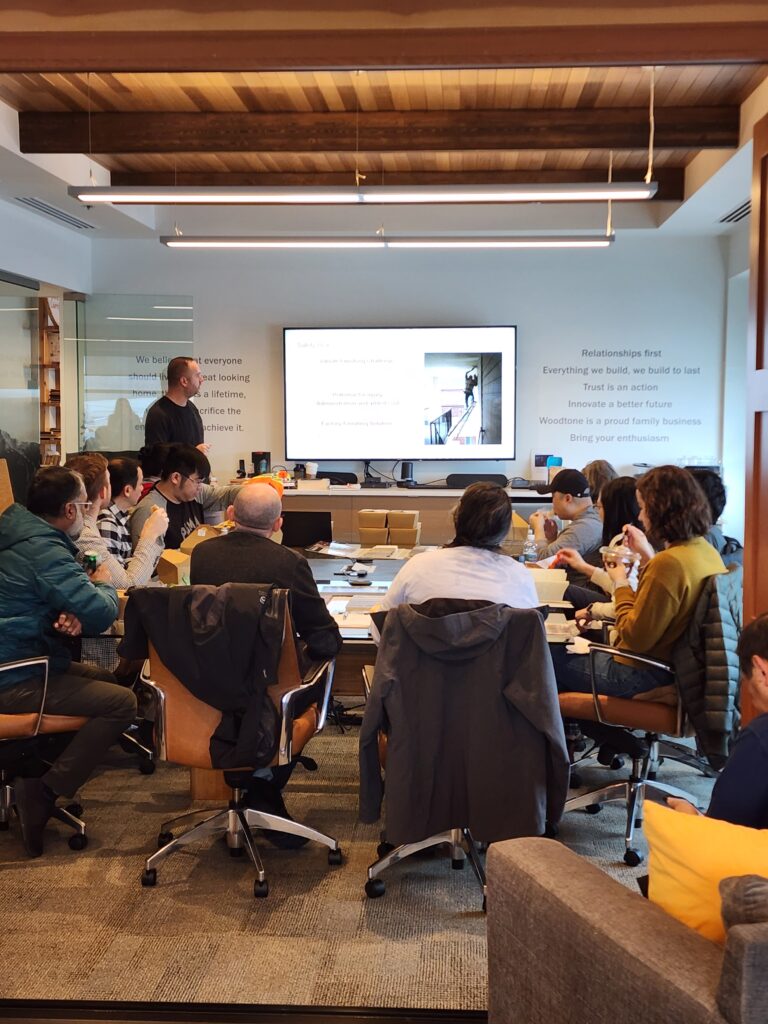
BC Wood offers selected topics for individual participation. Go to the Calendar for upcoming sessions and registration.
LUNCH AND LEARNS AVAILABLE FOR BOOKING REQUESTS IN DECEMBER 2024, JANUARY/FEBRUARY/MARCH 2025
Description:
As buildings are increasingly designed for environmental, occupant health, and well-being in mind, there is a growing requirement for ventilation openings between enclosed spaces. Ventilation pathways are notorious for transmitting sound, and there is also the challenge of creating airflow pathways without the complexity of modifying ceilings and walls to accept ducting, vents, and grilles.
This presentation reviews ventilation and acoustical challenges associated with creating comfortable interior environments. It also discusses the latest in ventilated door solutions that addresses these challenges.
This session will be presented by an industry professional from VANAIR DESIGN.
Learning Objectives:
Description:
With the global imperative to move to a low carbon economy, the way buildings are designed, manufactured, and built is a key component. In this session, we will look at the considerations for low embodied carbon and high carbon sequestering buildings, at prefabricated interlocking wood building systems and with a specific focus on lodges (e.g., cultural, golf, fishing, yoga), cabins, and off-grid retreat projects.
In particular, we will learn about the structurally durable and aesthetically beautiful material of choice: Western Red Cedar, which is sustainably sourced and processed in British Columbia. Further discussion will be around the architectural design guidelines of prefabricated interlocking building systems – perfect for building on islands, water-access lots or other remote locations, while leaving a low ecological impact.
This session will be presented by an industry professional from Panabode International Ltd.
Learning Objectives:
Description:
Heavy timber, whether solid or laminated, is one of the most versatile structural building components available. Aside from the obvious attraction to the material as a visual feature in a project, it is more than sufficient in a primary structural system and shines in hybridized structures. We are lucky that building technologies have progressed to a point where we have many options available to us, which allows us to select a combination of systems and materials to achieve the best of all options. This formula will vary from project to project, but timber remains as a structural and visual feature in many progressive contemporary west coast projects.
In this session we will look at how timbers have been employed with a range of other building systems choosing the best hybridized building system to suit a particular project.
This session will be presented by an industry professional from Island Timber Frame
Learning Objectives:
Description:
Cladding products start with the most natural, healthy, and sustainable resource available to the building trades – wood. That wood is then engineered, machined, and coated to create a full line of siding and trim products that deliver performance, stability, and beauty.
This session identifies causes for on-site exterior paint failure issues and how these factors can be eliminated through factory pre-finishing. Then examines the factory coating process for pre-finished exterior woodworks and substrate materials from an industry leader that supplies exterior cladding solutions across North America. Case studies of exterior building materials in multi-family, education, custom homes, resort/hospitality, production homes, and commercial developments will also be studied.
This session will be presented by an industry professional from Woodtone.
Learning Objectives:
Description:
The use of timber is construction has numerous beneficial properties and some important challenges. Designing the structure with heavy dimension timber or boards is not without problems and challenges. This is basically because timber is a natural and very complex material. Concerns of any significant impact from wood movement could lead the project to instead use engineered wood. Knowing how wood moves, heavy dimension timber or boards are not commonly used and only dealt in small scale. So, what can be done to prepare in advance the ability to utilize more natural wood as an option for a structure? This session will first understand the fundamentals of wood, what makes wood move, and how wood movement caused from shrinkage and stress release is commonly mitigated through kiln drying.
The session will next discover a new technology called KunEn, created by Daizen Joinery in British Columbia for stress release treatment for timber. The process makes wood stable and dry, leaving a natural look of freshly cut timber that can bring the wood usage into new different approaches. KunEn technology can also contribute to the United Nations’ Sustainable Development Goals to address global challenges and achieve a more sustainable future.
This session will be presented by an industry professional from Daizen Joinery.
Learning Objectives:
Description:
More Architects, Designers, and Homeowners are gravitating towards wood and other natural materials. Sustainability and reducing the carbon footprint continues to be a growing influence in consumers’ product choices, and innovative wood products are now at front and center. This presentation tells the story from the tree, specifically the Western Red Cedar, through sustainably managed processing into beautiful engineered wooden panels for exterior and interior walls, garage doors, and cabinet doors.
Wood is warm and aesthetically pleasing, but as a natural product there are concerns about its durability against the elements, finishing, and maintenance. This presentation also looks at how engineered edge-glued and cross-laminated Western Red Cedar panels can address these concerns, and how it compares with other cladding materials.
This session will be presented by an industry professional from Silva Timber Products.
Learning Objectives:
Description:
Engineered Wood Products (EWP) are commonly used as primary structural members in projects throughout BC. Although typically designed by Structural Engineers, they also play a vital role in vibration, acoustics, thermal, and fire performance. This session will introduce you to the benefits and possibilities of Engineered Wood Products and help you explore ways to engage with your Structural Engineer to improve the intended design and product performance in your next project.
This session will be presented by an industry professional from Weyerhaeuser.
Learning Objectives:
Description:
This session will cover the APA Appearance Classes of glulam beams:
Describe how structural grading defines the species, grade, and order of lamella in a prescriptive APA beam. Show NDS design tables of different species and layups.
Introduce APA Glulam Product Guide (document X440) and APA Technical Note Glulam Appearance Classifications for Construction Applications (document Y110C) as defining documents for appearance classes.
Describe the four Appearance Classes briefly using the APA language-
Session will be presented by an industry professional from FraserWood Industries
Learning Objectives:
Description:
Wood has been used as a construction material by humanity for centuries. It is universally known around the world for its natural beauty and relative workability compared to other materials. In decades past, it has been pushed out in favor of modern synthetic materials for windows and doors. This coupled with its historical limitations in sizes, high maintenance, and lackluster structural, air, and water performance, has further reduced the popularity of wood for window and door construction. This seminar aims to address these historical issues with wood as a building material.
Case studies of hybrid curtain wall systems will be presented, with a focus on advancements made in British Columbia’s wood-window industry. Advantages exclusive to hybrid curtain wall’s ability to meet Passivhaus and 3rd party thermal standards will be examined, alongside the gaskets used to achieve water tightness. Also highlighted will be the advantages of unitized curtain wall systems for job site and labor efficiency.
This session will be presented by industry professionals from Unison Windows and Doors.
Learning Objectives: